"We choose to go to the moon," the president said. "We choose to go to the moon in this decade and do the other things, not because they are easy, but because they are hard, because that goal will serve to organize and measure the best of our energies and skills, because that challenge is one that we are willing to accept, one we are unwilling to postpone, and one which we intend to win, and the others, too."
When I orbited the Earth in a spaceship, I saw for the first time how beautiful our planet is. Mankind, let us preserve and increase this beauty, and not destroy it!
Apollo 11 was a watershed mission. It was unique. It would never be repeated to have another first human being walk on an extraterrestrial world. [For more info: Apollo 11 Mission Overview ]
In 1969, an estimated 530 viewers watched Neil Armstrong take his first step on the moon:
And he said these words: "...one small step for a man, one giant leap for mankind"
What about the second man?
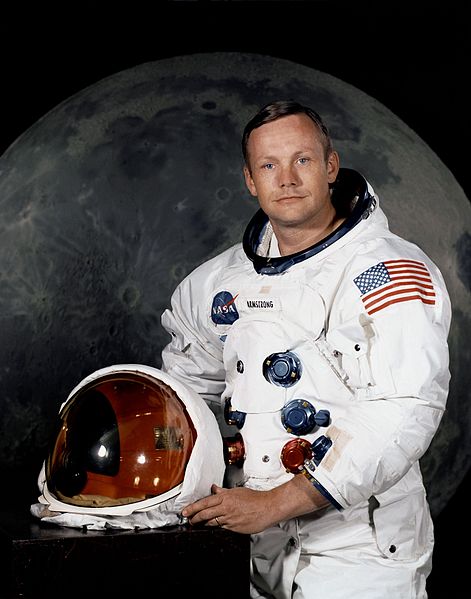
Buzz Aldrin is the man in the spacesuit in the photo at the top of the page. And Neil Armstrong took his picture. His words were most poetic recorded in the clip below:
In the first book of The Commander and the Chief series, His Tribe of One, Chief Nova Orlovic remembers the second man on the moon as well as the first. The following excerpt takes place in the Middle-Eastern desert with Nova, Colonel Jack Sheffield, and Commander Reginald Barrett during their search for Admiral Quinn:
Mid-morning, Jack stopped on the crest of a bluff and
surveyed the landscape. “I need to do a recalibration.” He turned on his smart
tablet, then connected a cable into the KNOSE.
“Magnificent desolation.” Nova scanned the wilderness—edifices
of stone, rising like fortresses, floating on an ocean of pale yellow sand.
“I’ve heard that before. Somewhere.” Reggie skimmed the
desert-scape from his backseat window.
Nova turned around. “Buzz Aldrin.”
“Buzz who?” Reggie squinted at her.
“How quickly we forget.” Nova shook her head. “Buzz Aldrin
was the second man on the moon…after Neil Armstrong, of course.”
“Right-o.” Jack chimed in. “Admiral Quinn was an astronaut.
So you know this ancient history.”
“Doesn’t seem that long ago, though it happened before I was
born.” Nova panned the moonscape-like desert. “Yet this place reminds me of the
Badlands in the Dakotas, only with sand and stuff.”
Jack said, “So these Badlands look like the moon?”
“In many ways, they do.” Nova returned a fond look.
“Actually Jack, parts of Wyoming have been likened to Antarctica.”
from Part 5: The Badlands, Chapter 1: The Backside of the Desert. [for more info on the book: smithsk.com/cc.htm ]
To Infinity and beyond ....
Though Neil Armstrong had shunned the limelight and passed away in 2012, Buzz Aldrin has been more active in popular culture as well as promoting his vision of space.
And he inspired Disney's Toy Story character, Buzz Lightyear. In the clip below, one Buzz coaches another Buzz for a coming shuttle mission to the International Space Station. [reference: Buzz Aldrin FAQ ]
In step with the times, Buzz Aldrin is active on social media, such as twitter@TheRealBuzz and FacebookBuzz Aldrinas well as his own website: buzzaldrin.com.
On July 20, 1969 - 45 years ago - two men, Neil Armstrong and Buzz Aldrin, were the first humans to walk on the moon. [reference: First Man on the Moon]
Much has been recorded on this epic event. But after those first few minutes after they landed on the moon, Buzz Aldrin said, "This is the LM pilot. I'd like to take this opportunity to ask every person listening in, whoever and wherever they may be, to pause for a moment and contemplate the events of the past few hours and to give thanks in his or her own way."
"In the radio blackout, I opened the little plastic packages which contained the bread and the wine. I poured the wine into the chalice our church had given me. In the one-sixth gravity of the moon, the wine slowly curled and gracefully came up the side of the cup. Then I read the Scripture, 'I am the vine, you are the branches. Whosoever abides in me will bring forth much fruit. Apart from me you can do nothing.'
"I had intended to read my communion passage back to earth, but at the last minute [they] had requested that I not do this. NASA was already embroiled in a legal battle with Madelyn Murray O'Hare [sic], the celebrated opponent of religion, over the Apollo 8 crew reading from Genesis while orbiting the moon at Christmas. I agreed reluctantly. I ate the tiny Host and swallowed the wine. I gave thanks for the intelligence and spirit that had brought two young pilots to the Sea of Tranquility . It was interesting for me to think: the very first liquid ever poured on the moon, and the very first food eaten there, were the communion elements."
July 20th marks another anniversary of the moon landing of Apollo 11. Neil Armstrong took the first steps and said these words while a large part of the world was watching -
Much of the moon shot was made possible by understanding the laws of physics. And Galileo was a pioneer in modeling the effects of gravity on masses. In the1500s, Aristotle's description of nature had reigned for 2000 years. But Galileo challenged this model with his hypotheses - all objects fall (with no air resistance) fall at the same rate.
Such is seen below as this experiment carried out on the Leaning Tower of Pisa:
The proposed science experiment in space boasts an accuracy in measurement of 1 part in 10 to the18th power - that is, 1 in 1,000,000,000,000,000,000. When or if this satellite launches, we will have an opportunity to gather more data. (reference: STEP – The Satellite Test Of the Equivalence Principle (PDF) )
With this small STEP, will three be a charm and Galileo wins, again? You betcha.
Burma-Shave was a brush-less shaving cream company, started in 1925. Eventually, the company was sold to Philip Morris in 1963 and faded from our consciousness. But Burma-Shave has left its mark in Americana for its clever advertising jingles displayed on highway signs. (reference: Feeling nostalgic? Now you'll rave! Here's the story of Burma Shave)
Yes, back in 1955 Burma-Shave did offer a free trip to Mars as a promotional gimmick as shown in the ditty above. (reference: Burma-Shave jingles 1955)
But the company did not count on one determined man, Arliss French, from Appleton, Wisconsin to take them up on it. Mr. French gathered those 900 empty jars. And Burma-Shave did keep their word and sent Mr. French and his wife to Mars. Only it was spelled - Moers (pronounced "mars") and it was in Germany, that is. (reference:Snopes - True)
Burma-Shave's jingles and sending a customer to Mars (though in Germany) in 1955, two years before Sputnik, attest to American Ingenuity (AI).
This humorous story also shows the fascination we have had with the Red Planet. Just google "Mars." (Speaking of Google, as we have Google Earth, we have Google Mars. Enough said.) But according to the Science Fiction of the 1950s, we are long overdue in sending men to the Mars - check out: Mars Science Fiction.
The future isn't what it used to be ...
Neil Armstrong in 1969
On the topic of space travel, one of the heroes of American Ingenuity and Exceptionalism is Neil Armstrong, the first man on the moon, who passed away recently (August 25, 2012).
These cuts coincide with last few years when belief in American Exceptionalism and American Ingenuity has been shaken. The $16 trillion debt, high unemployment, deep recession, diminishing world influence lead to the conclusion that America is in decline. (reference: Is America A Nation In Decline? - Forbes)
One columnist, Craig Shirley, laments the death of Neil Armstrong with the death of American exceptionalism as political elites seem to question that notion. Our clear sense of right/wrong and good/evil have been replaced by "moral equivalency." Shirley writes that as a young boy, John F. Kennedy inspired him, but as a middle-aged man, Barack Obama dispirits him. (reference: Armstrong and the Death of American Exceptionalism)
American Ingenuity and Exceptionalism dead?
As Americans mourn the passing of Neil Armstrong, earlier in the month of August, NASA has breathed new life in the American spirit by the success of the Mars mission - Curiosity.
SciFi icon William Shatner - "Captain Kirk" - narrates the sophisticated technical maneuvering to navigate this rover successfully to the Martian surface. Below, he details the "Grand Entrance" as it was planned to happen when touching down on Mars -
And here is what really happened, August 5, 2012 -
Whew!
White House Science Adviser John Holdren said in a post-landing briefing:
"If anybody has been harboring any doubts about the status of US leadership in space, there is a one-ton automobile sized piece of American ingenuity, and it is sitting on the surface of Mars right now." (reference: New York Times - Curiosity Rover Lands Safely on Mars )
Maybe the Mayans were wrong, and 2012 is not the end of the world (only kidding, but check out this link: 2012 End-of-the-World Countdown Based on Mayan Calendar Starts Today - ABC News) .... but a turning point. Curiosity is the boost we need * to get our groove back * and this video below gives a well-deserved victory dance.
What a magnificent tribute to the men and women who pioneered the space program ... especially a tribute to Neil Armstrong, who personifies the spirit of American Ingenuity!
I know this post will date me, but I remember the evening of July 20, 1969 very well. I was back east with my mother’s family, sitting in my uncle’s living room. We all gathered about the television set to watch history being made.
Neil Armstrong emerged from the lunar capsule. “That's one small step for man; one giant leap for mankind,” he said to the world via the radio transmission almost 240,000 miles away, as he left his foot print in the lunar dust - the first man on the moon.
This feat consummated the space race between the two Cold War super powers, the United States and the former Soviet Union, which started more than a decade before the moon walk.
October 1957, the sighting of Soviet satellite, Sputnik, inspired the son of a West Virginian coal miner. Homer Hickam and his friends, overcoming many obstacles, designed rockets and won science fairs, for which they were awarded scholarships to go to college.
Homer Hickam wrote about this in his book “Rocket Boys” released in 1998. In 1999, a movie was made, an anagram of the original title - “October Sky.”
The 30th anniversary of the moon walk, July 1999, Homer Hickam’s Wall Street Journal article - Time to Be Great Again - reflects on this moment of history: Time to Be Great Again
Much has been and will be said of this 40th anniversary, but this "Rocket Boy" said it very well ten years ago.